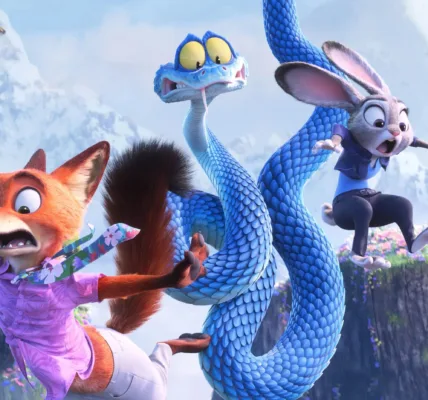
You can build the most intricate plot in the world. Elaborate twists, high-concept stakes, jaw-dropping set pieces. You’ll still lose your audience by page 20 if there’s no character they care about. Character isn’t decoration on top of your story. Character is the story. Every great screenplay, from Get Out to Parasite to Spirited Away, works because a specific person with specific desires and contradictions makes choices we can’t look away from.
Why Character Comes First
How Character Turns an Idea Into a Story
Most emerging screenwriters start with a concept: what if someone discovered they were living in a simulation? What if a heist went wrong? Those are premises, not stories. A premise becomes a story once you place a specific character with a specific psychology inside it. The concept is the pressure. The character is the response, and the response is what we watch.
The Matrix isn’t really about a simulation. It’s about a man who has spent his whole life feeling like he doesn’t belong, finally discovering he was right. The sci-fi world is the container. Thomas Anderson’s doubt, hunger, and fear are the engine.
When you’re developing a script, ask who this concept happens to, and why it matters that it happens to them specifically. That’s your story.
Why Plot Feels Stronger When It Starts With Choice
Screenwriting advice tends to focus on structure: three acts, midpoints, inciting incidents. Structure matters, but without character motivation underneath it, structure is just furniture. Audiences feel the difference between a plot event that happens to a character and one a character causes. Walter White doesn’t get cancer and become a drug lord. He chooses to, over and over. That’s what makes it devastating.
Build the choice first. The plot point follows.
Motivation Gives Characters Direction
External Goals and Internal Needs
Every compelling character operates on two levels at once: what they want and what they need. The external goal is concrete: get the money, win the case, escape the town, find the killer. The internal need is emotional, often unconscious: learn to trust, accept loss, stop running from yourself.
The tension between those two tracks is the heartbeat of character development. A character who achieves the external goal while failing the internal need feels tragic. A character who fails the goal but fulfills the need can feel triumphant. When both align, or spectacularly collide, that’s when stories become unforgettable.
In The Farewell, Billi’s external goal is simple: attend her grandmother’s fake wedding without revealing the terminal cancer diagnosis. Her internal need is to reconcile her American identity with her Chinese roots, and to learn that love sometimes looks like silence. Roger Ebert’s review points to exactly this: the film’s power comes from what the characters don’t say out loud.
How Motivation Creates Scene-by-Scene Momentum
Here’s the practical application: every scene should be motivated by what the character wants in that moment, not what the plot needs, not what you need to set up for later. What does this person want right now, and what’s stopping them?
Write from desire and obstruction and scenes generate their own energy. The drama isn’t manufactured. It’s the natural result of a person pursuing something against resistance. This is the single biggest difference between scripts that feel alive and scripts that feel like outlines dressed in dialogue.
Contradiction Makes Characters Feel Human
The Gap Between What Characters Say and Do
Real people are contradictory. We say we don’t care and then refresh the page every five minutes. We claim we’ve moved on while keeping every text. Characters who behave too consistently, always brave, always selfish, always loyal, read as concepts, not people. The humanity is in the gap.
The most riveting characters do one thing and feel another, or want two incompatible things at once. That contradiction is the source of subtext, the layer of meaning running underneath every line of dialogue. When a character says “I’m fine” while clearly not being fine, the audience leans in. They’re doing interpretive work, and that’s exactly what you want.
Flaws, Fears, and Competing Desires
Character flaws aren’t liabilities to apologize for. They’re the story’s fuel. A character without flaws has nothing to overcome, so the arc goes flat. Flaws should be specific, connect to the character’s backstory, and actively get in the way of what the character needs.
Fear is often the root of the most revealing flaws. In Y Tu Mamá También, Tenoch and Julio’s friendship is genuine and deeply fragile, cracked by class anxiety, competitive masculinity, and the fear of being truly seen. Their flaws are the story. The road trip is just the crucible.
Don’t ask what your characters are good at. Ask what they’re afraid of, and what they do wrong because of it.
Stakes Make Character Choices Matter
Personal Stakes Before World Stakes
Blockbusters get this backward. They escalate to world-ending threats without establishing why this particular character losing would be devastating. The result is technically high stakes that feel emotionally low.
Personal stakes, the risk of losing a relationship, an identity, a sense of self, land harder than global catastrophe because they’re specific. We have a reference point. Before you ask your audience to care whether the city is saved, make them care whether this person survives emotionally.
In Get Out, the horror isn’t abstract. Chris’s stakes are personal: his identity, his body, his autonomy. Jordan Peele understands that the most terrifying thing isn’t the concept. It’s the specific violation of one man’s personhood. The Writers Guild named the script the greatest screenplay of the century for exactly this reason: the premise never outruns the person at its center.
How Stakes Escalate Without Feeling Forced
Escalation works when each raise is a logical consequence of a prior choice. The character did X, so Y is now inevitable. That chain, decision to consequence to higher stakes, is what makes a screenplay feel propulsive instead of manipulated.
If you’re escalating through external events alone (a new villain appears, a random disaster strikes), plot is driving your story, not character. Push it back: whose choice caused this new pressure? Whose fear made it inevitable?
Backstory Should Shape Behavior, Not Stop the Story
What the Audience Needs to Know
Film students tend to over-write backstory. They want to explain every scar, every motivation, every formative wound, because they know the character that deeply. But the audience doesn’t need to know what you know. They need to feel its effect.
The question isn’t “what happened to this character?” It’s “how does what happened show up in who they are right now?” That shift changes everything. Backstory becomes behavior. History becomes present-tense texture.
Revealing the Past Through Action
Reveal backstory through action, dialogue, subtext, and choice, never through exposition dumps. A character who locks the door twice before leaving isn’t paranoid because the script says so. We see it, and we infer the wound. A character who can’t accept help from anyone has a history. We feel it before we’re told it.
Resist the flashback until you’ve exhausted every way to reveal the past in the present. Most of the time, you won’t need it.
Voice Makes Characters Distinct on the Page
Dialogue That Reflects Desire and Pressure
Every character in your script should sound unmistakably like themselves, not like your writing voice, like theirs. The vocabulary, the rhythm of their sentences, what they talk around versus what they say directly: all of it is character voice, and it should be as unique as a fingerprint.
Strong dialogue isn’t about being witty or quotable. It’s about revealing desire under pressure. In every scene, a character is pursuing something or protecting something. Their lines should reflect that, even obliquely. Especially obliquely.
If you can remove a character’s name from the script and still know exactly who’s speaking, you’ve nailed their voice.
How Silence, Gesture, and Subtext Create Voice
Some of the most powerful character moments in film are silent ones. Chihiro’s face as she watches her parents turn into pigs in Spirited Away. The way Bong Joon-ho lets the camera sit on a face a half-second longer than comfortable. Voice isn’t just what people say. It’s what they can’t bring themselves to say, and what they do instead.
Subtext is the craft of burying meaning. Argue about doing the dishes; actually argue about respect. Talk about the weather; actually talk about whether the marriage is over. When the surface conversation and the real conversation diverge, the scene has depth.
Strong Characters Drive Plot
Decisions, Consequences, and Turning Points
A story’s turning points should feel inevitable in retrospect, the direct result of who this character is and what they chose. Not coincidence. Not convenience. Character.
When you’re stuck on your script, go back to the character. What does this person genuinely want right now? What would they realistically do? If the answer is “they’d wait for help,” you have a passive protagonist problem. If it’s “they’d do the wrong thing for the right reasons,” you’re probably on track.
Avoiding Passive Protagonists
A passive protagonist doesn’t drive the story. They’re carried by it, watching and reacting while things happen around them. It’s the most common structural problem in student scripts, and it’s a character problem wearing a plot problem’s clothes.
The fix is almost always the same: give the character something they desperately want, put an obstacle in their way, and force them to choose. The choice doesn’t have to be heroic. It can be cowardly, selfish, or misguided. What it can’t be is absent.
Character Examples Worth Studying
Each of these films is a masterclass in character-driven storytelling, and none of them are the same type of movie. That’s the point.
Get Out (Jordan Peele, 2017): Chris’s hyper-vigilance is backstory made behavioral. Every choice stems from who he is and what he’s learned to watch for.
Parasite (Bong Joon-ho, 2019): Every member of the Kim family is driven by a specific flavor of ambition and shame. Their flaws cause the plot; the plot doesn’t impose itself on them. The Criterion Collection’s release is worth studying for how tightly Bong ties the film’s class commentary to individual psychology.
The Farewell (Lulu Wang, 2019): An entire film built on the gap between what characters say and what they feel. Subtext as the primary mode of storytelling.
Spirited Away (Hayao Miyazaki, 2001): Chihiro’s arc, from passive and whiny to determined and compassionate, is the whole film. The fantastical world is the arena.
Y Tu Mamá También (Alfonso Cuarón, 2001): Two characters who can’t be honest with themselves or each other. Their internal conflict is the engine. The road trip is the pressure cooker.
Watch these films with the sound off for five minutes each. Notice how much character you can read from behavior, posture, and expression alone. That’s the goal.
Character Questions for Drafting, Revising, and Table Reads
Whether you’re in the Writing for Film & TV program, working through a Film or Animation project, developing a short for a Film Production class, or scripting audio drama in Audio Production, these questions work at every stage.
For drafting:
- What does this character want more than anything? What are they willing to sacrifice for it?
- What do they believe about the world that isn’t true, or isn’t true anymore?
- What’s the worst version of this character’s flaw? Have I written scenes where it costs them something real?
For revising:
- Can I remove this character’s name and still know who’s speaking from the dialogue alone?
- Is each scene motivated by what the character wants, or by what the plot needs?
- Where am I explaining backstory instead of showing its effects?
For table reads:
- Does every character feel like they exist outside the scenes where we meet them?
- Are the stakes personal before they’re universal?
- Where does the protagonist make a choice that changes the story’s direction, and is it their choice, or the plot’s?
Bring these into every workshop, every notes session, every revision. Character is the craft that’s hardest to teach and most worth learning, because once you crack it, every other element of the script falls into place around it.
Conclusion
Plot is what happens. Character is why we care. The screenwriters who endure, the ones whose scripts get made and who build careers in this industry, are the ones who understand that every structural decision, every dialogue choice, every scene is ultimately a character question. If you’re serious about film writing, the best investment you can make is learning to build people who feel as real on the page as anyone you’ve ever known.
That’s the work. It’s difficult, it’s specific, and it’s entirely learnable.
Ready to go deeper? The LA Film School’s Writing for Film & TV program is built for writers who want to do this work at a professional level, in a community of filmmakers, storytellers, animators, musicians, and creators building toward the same thing. Whether you’re writing your first short or developing a feature, we’re here for every draft.
Explore programs → | Request info → | Apply now →
FAQs: Why Character Is the Engine of Every Great Script
Why is character important in screenwriting?
Character matters because audiences connect to a story through what people want, fear, choose, and lose. Strong characters give the plot emotional purpose. Without them, even a technically impressive screenplay falls flat.
How do characters drive plot?
Characters drive plot when their choices create consequences. Instead of reacting to events, strong protagonists pursue goals, make mistakes, take risks, and force the story to change direction. The plot is a record of their decisions.
What makes a character feel realistic?
Clear motivation, contradictions, flaws, desires, and pressures. A realistic character doesn’t need to be likable, but needs to feel specific and emotionally understandable. Inconsistency, when it’s true to who they are, makes them human.
What’s the difference between a character’s goal and need?
A goal is what the character actively wants: a job, a relationship, an escape, a victory. A need is the deeper emotional truth the character may resist throughout the story. The tension between goal and need is often where the most compelling drama lives.
How much backstory should a script include?
Enough to explain behavior, conflict, and emotional stakes. The strongest backstory surfaces through action, dialogue, subtext, and choice, not exposition. If you can show the wound’s effect without naming the wound, do it.
How can film students write better dialogue?
A main character who waits for things to happen. Strong screenwriting gives the protagonist meaningful choices that shape the story’s direction, even when those choices are wrong.